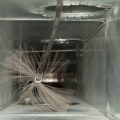
I've lost count of how many homeowners have told me some version of the same story. The forecast promised a windy day. They threw open every window to air the place out. Two days later they're standing in the utility closet holding a filter that looks like it spent the weekend inside a fireplace. Their forecast wasn't wrong. It just answered a question nobody was actually asking about whether conditions would reach a good air quality index. Here's what governs whether the air gets better or worse, along with the short checklist I run before I decide what to do with my own windows.
TL;DR Quick Answers
Air Quality Minnesota
Air quality in Minnesota rises and falls mostly on wind direction during wildfire season, not wind speed. Flow out of the north or northwest carries Canadian smoke into the state. A southerly shift usually clears it within hours.
Read direction before speed. North and northwest in fire season means smoke is arriving, however strong or gentle the breeze feels.
Alerts begin above AQI 100, where orange affects sensitive groups and red affects everyone.
A cold front can push readings up before it brings them down, because it mixes smoke to the surface from overhead.
The outdoor number isn't your exposure number. You'll spend most of a smoke event indoors, so your windows, your fan setting, and the state of your filter decide what you actually breathe.
Top Takeaways
Wind direction determines whether smoke arrives or leaves. Speed is a secondary detail.
North and northwest flow during Canadian fire season means smoke is inbound, however pleasant the breeze feels on your face.
A cold front often makes things worse before it makes them better, because it mixes high-altitude smoke down to where you breathe.
Stagnant high pressure produces the longest and most punishing episodes by capping vertical mixing entirely.
Calm evenings can concentrate smoke near the ground, so overnight readings sometimes beat the afternoon.
A long soaking rain clears particles. A passing shower mostly doesn't.
Indoor exposure is the exposure you control. Close it, circulate it, filter it, and stop adding to it.
Check filters far more often in the fire season. Smoke will load one in a fraction of its rated life.
Why Direction Matters More Than Speed
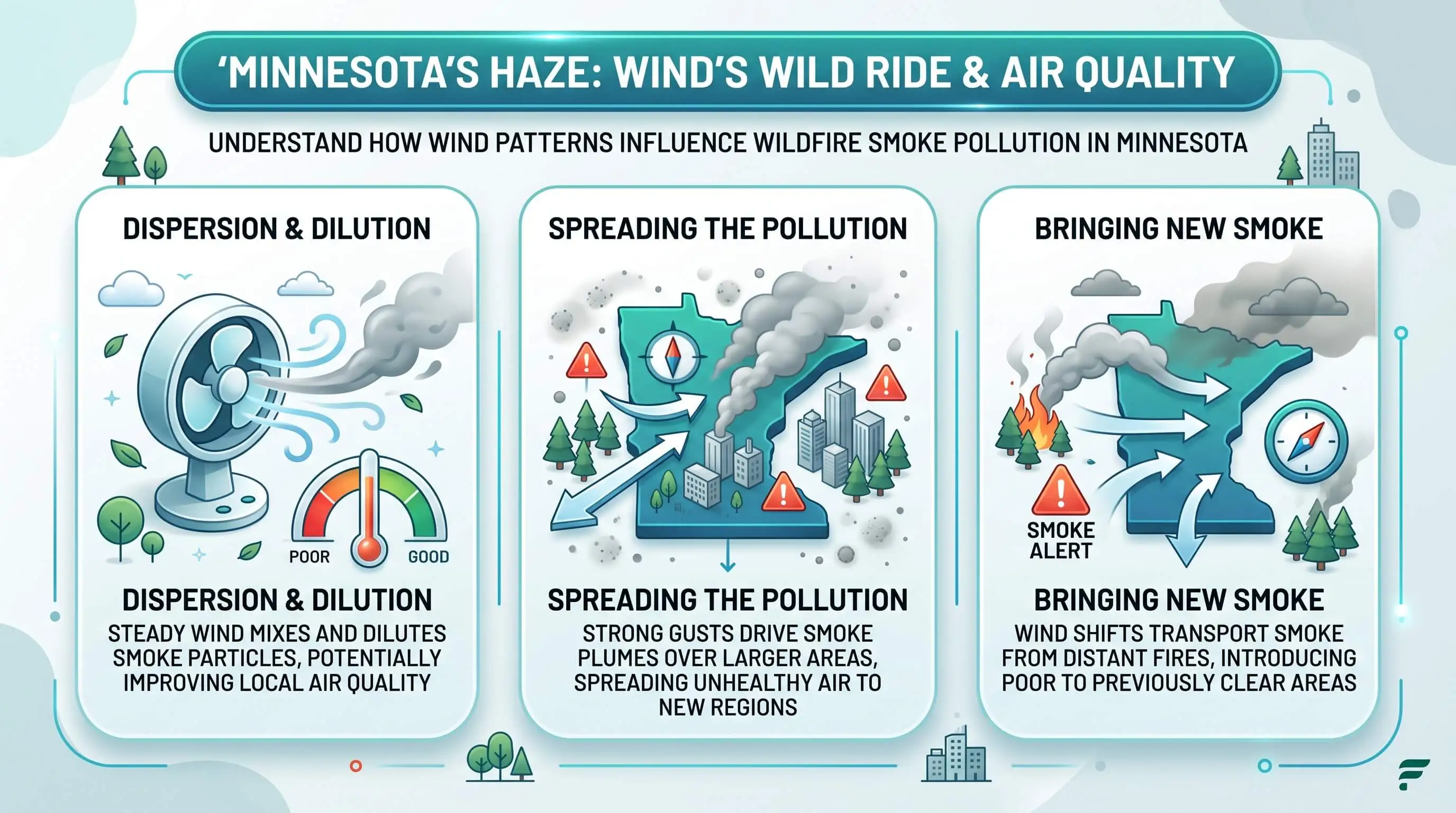
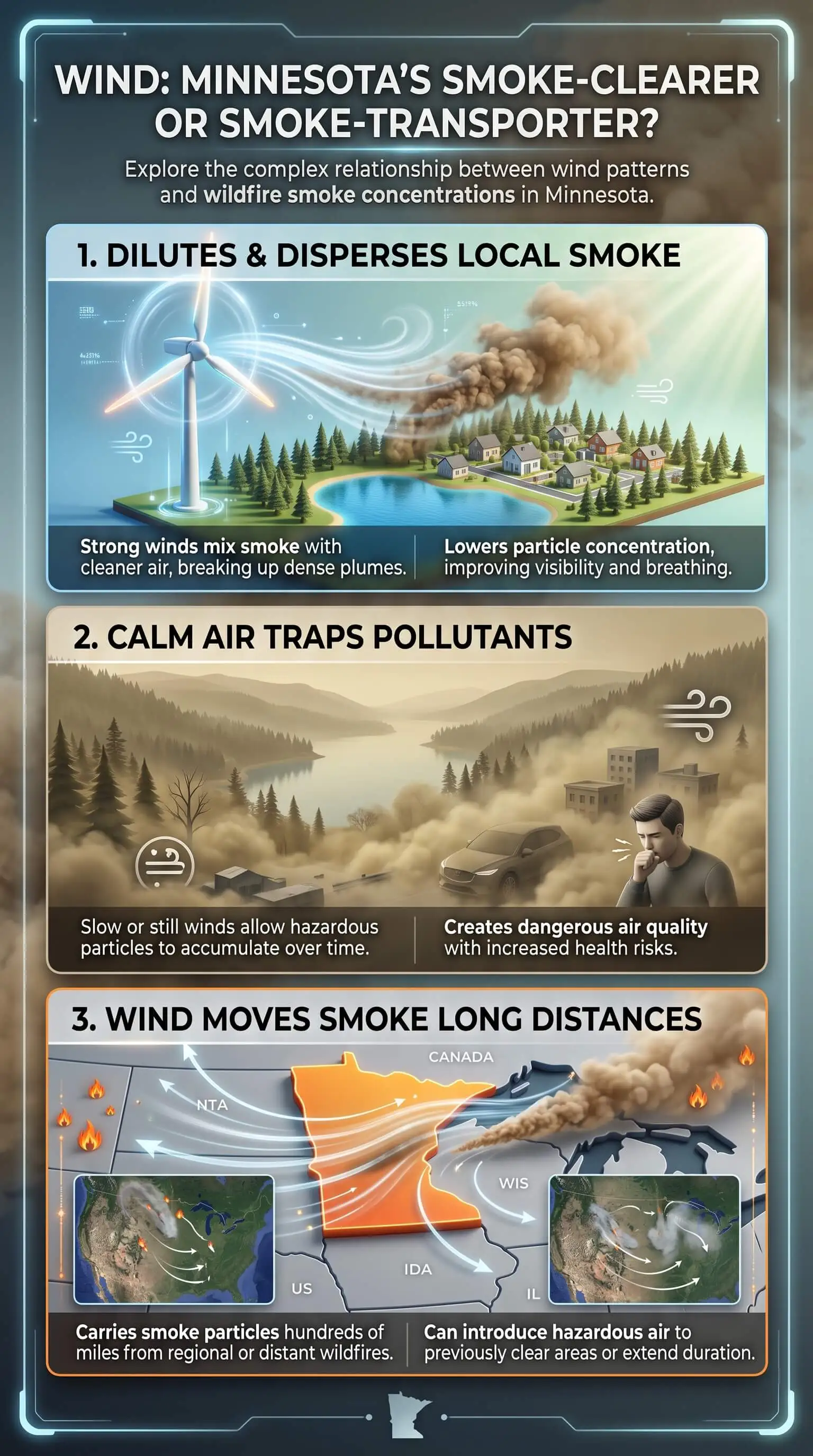
Smoke is a passenger. It rides whatever flow is moving, and the flow you feel at ground level is what shows up on your phone as wind. Air that arrives from the north or northwest during fire season has already crossed hundreds of miles of burning boreal forest, and it brings fine particles along for the ride. Turn that flow southerly and the source ends up behind you, with surface readings usually dropping inside a few hours.
Speed only starts to matter after direction is settled, and even then it does less than people expect. Twenty miles an hour out of the wrong quadrant is a delivery truck. Five miles an hour out of the right one is a slow rinse that actually gets somewhere.
Why Minnesota Sits First in Line
The northern border of Minnesota runs along the same boreal forest that stretches across Manitoba, Saskatchewan, and Ontario. That single fact explains most of what happens to the air here every summer. When the flow comes out of the north, the state sits directly downwind of one of the largest fire regions in North America, with no mountain range and no ocean in between to break things up.
Smoke doesn't have to be local to become your problem. Particles travel for days. They ride a mile or more overhead where you can't see them and have no reason to suspect them, then drop to breathing level once the ground warms and mixes the column. That's why the sky can look mildly hazy at breakfast and the air can taste like a campfire by three in the afternoon.
What Actually Clears the Air
A wind shift does most of the work. Once the flow turns and the fires sit upwind of somebody else, concentrations fall quickly, sometimes inside a couple of hours when the change is sharp. Almost every smoke episode I've watched ended with a shift in direction rather than a shift in speed.
Steady rain pulls its weight too, because falling droplets capture particles and carry them to the ground. The caveat matters more than the mechanism here. Ten minutes of drizzle under a deep plume barely registers on a monitor. A long soaking rain does genuine work, and you can watch the readings drop while it falls.
A rising mixing height helps in a narrower way, and it comes with an asterisk worth understanding. Nothing leaves. As the ground heats through the morning, the layer of atmosphere holding all those particles simply gets deeper, so the same quantity of smoke spread through more volume reads lower at the monitor. The air got thinner. It didn't get any cleaner.
Where the Forecast Will Fool You
There are more ways for wind to hurt you than help you, which is why I stopped trusting any forecast that just says windy and clear.
An approaching cold front can drag elevated smoke down to the surface. Smoke that was sitting comfortably above your roofline, invisible and harmless, gets mixed to ground level as the front sweeps through. The forecast said the front would clean things up. Instead the worst hours started after it passed. I've seen filters load faster on the clearing day than on the smoky day before it.
Strong high pressure puts a lid on the whole atmosphere. Sinking air caps vertical mixing and pins smoke at breathing level for days at a stretch, no matter how briskly the surface wind blows underneath it. The longest smoke stretches in state history weren't the windiest ones. They were the ones where a stubborn high refused to move along.
Calm nights fool people too. When the wind drops after sunset, a shallow layer forms near the ground and whatever smoke is already sitting there gets packed into it. I've seen overnight readings climb well past what the same location showed at noon, which is a rough surprise if you left a window cracked for sleeping.
And dry, gusty weather lifts coarse dust with no fire involved at all, while sunlight working on smoke generates ozone right at ground level on top of the particles already there. On days like that you're breathing two pollutants instead of one.
The Five Things I Check Before I Open a Window
The AQI category, not just the number. Orange, red, and purple mean different things for different people under the same roof.
Wind direction for the next 24 hours. North and northwest are the warning flags.
Whether a front is coming through, and when. If one is, I plan on things getting worse before they get better.
Whether the rain in the forecast is a passing shower or a real soaking. Only one of those earns its keep.
Whether high pressure is parked overhead. If it is, I assume the smoke stays and I plan indoors.
Before you commit to anything, pull up the live air quality index readings for Minnesota and see what the monitors closest to you are actually reporting. Reading a real number beats standing on the porch squinting at the horizon, which is how most of us have been making this call for years.
Protecting Indoor Air When the Wind Won't Cooperate
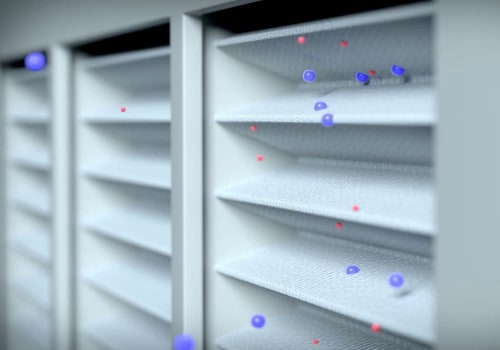
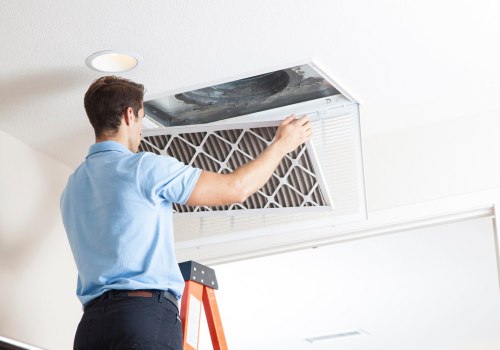
When the flow is wrong and the lid is on, the only air you control is the air inside your house. So control it. Shut the windows even if 72 degrees feels perfect outside, because pleasant air full of fine particles is still full of fine particles. Move the system fan off auto and onto continuous circulation so indoor air keeps cycling through filtration instead of sitting still between cooling calls. Step up to high quality filters for the season if your equipment can handle the added resistance, and check it far more often than you normally would. A smoke event will load a filter in a fraction of its rated life.
Skip anything that adds particles while you're sealed up, which rules out candles, the wood stove, high-heat searing, and vacuuming with a machine that lacks proper filtration. You're running a closed system for a few days. Keep what goes into it clean.
None of this is unique to one state, either. The same mechanics govern smoke and haze anywhere in the country, whether the source is a boreal fire in Canada, a prescribed burn in the Southeast, or dust lifted off dry ground three states west. Learn to read direction, fronts, and mixing height once and the skill follows you wherever you live.
"Most people treat wind like a cleanup crew. They hear a windy day is coming and they hear relief. In the fire season it works more like a shipping forecast. What loaded filters have taught me is that the worst indoor exposure almost never lines up with the smokiest looking sky. It lines up with the day a front came through and pulled smoke down from overhead while everybody had their windows wide open, enjoying the breeze. If one habit is worth building out of all this, make it checking direction before speed. That change will do more for your family than anything I could sell you."
7 Essential Resources
These are the pages I actually keep open during an active smoke episode. Every one is a live primary source.
AirNow Fire and Smoke Map (EPA and US Forest Service). Fire locations, smoke plumes, and near real-time fine particle readings from permanent monitors and corrected low-cost sensors, all on one screen.
Wildfire Smoke (Minnesota Department of Health). Symptoms, at-risk groups, and the outdoor activity thresholds schools and childcare programs use.
Twin Cities forecast office (National Weather Service). Wind direction, frontal timing, and hazardous weather outlooks. This is the half of the picture an AQI number alone will never give you.
Learn About Wildfires and Indoor Air Quality (US EPA). The plainest guidance I've found on keeping outdoor smoke from becoming indoor smoke.
Smoke Ready (Interagency Wildland Fire Air Quality Response Program). Preparation guidance that gets specific about HVAC settings and cleaner air room setup.
Wildfire smoke guidance for outdoor workers (League of Minnesota Cities). Written for employers, useful for anyone, because it spells out the AQI action thresholds without hedging.
Wildfire Smoke and Air Quality (Wisconsin DNR). Worth watching from across the border, since smoke crossing one state is usually about to cross the other.
During an active smoke episode, reliable air-quality and weather guidance can help homeowners make better decisions about HVAC system maintenance, including filter checks, fan settings, and indoor air circulation to reduce the amount of wildfire smoke that stays inside.
3 Statistics
July 14 through July 17, 2026 was provisionally the worst and most widespread smoke outbreak on record for the state, driven by fires that started in the northern forests on July 7. A monitor at Blaine recorded 342.8 micrograms per cubic meter of fine particles, breaking the Twin Cities record by a wide margin. Source: Minnesota DNR State Climatology Office.
The state logged a then-record 52 air quality alert days in 2023. Sixteen came from fine particles in wildfire smoke, and nine hit the red category, meaning the air was unhealthy for everyone and not just sensitive groups. Source: Minnesota Pollution Control Agency.
State meteorologists point to one factor shared across the hardest seasons of 2021, 2023, 2024, and 2025: persistent northwesterly winds pulling smoke straight into the state. Direction isn't one variable among many. It's the variable. Source: Environmental Initiative interview with MPCA and MDH staff.
With Minnesota seeing record-breaking smoke, dozens of air quality alert days, and persistent northwesterly winds carrying wildfire pollution into the state, fresh pleated furnace filters can give households a practical advantage by helping reduce the fine particles circulating indoors when smoke arrives.
Final Thoughts and Opinion
Here's my honest read after enough of these seasons to have formed one. We talk about smoke days the way we used to talk about cold snaps, as weather that simply happens to us. That framing is holding people back. Cold snaps became manageable once everybody learned to read a wind chill number and act on it, and smoke days will go the same way once checking wind direction in fire season feels as automatic as checking rain odds before a cookout.
The public conversation also leans far too hard on the outdoor number. The AQI describes the air on your lawn. Most people spend the overwhelming majority of a smoke event indoors, which means the indoor number governs their actual exposure, and nobody publishes that one. Two houses on the same block, staring at the same AQI reading, can hold wildly different air depending on whether the windows are shut and the fan is moving.
Where I'll push back on the standard advice: telling people to stay inside is incomplete. Sitting inside a leaky house with the fan on auto and a filter that hasn't been changed since April is barely safer than sitting on the porch. What helps is closing it up, circulating it, filtering it with MERV 8 pleated HVAC furnace air filters, and refusing to add to it. That's a plan somebody can follow. Stay inside is just a suggestion with good intentions behind it.
Frequently Asked Questions
Does rain clear wildfire smoke?
Steady, prolonged rain does, because falling droplets capture fine particles and carry them to the ground. A short shower under a deep plume accomplishes very little. Judge the forecast on duration and intensity rather than on whether precipitation shows up at all.
Is it safe to exercise outdoors when the AQI is orange?
Orange means unhealthy for sensitive groups. If you have asthma, heart or lung conditions, or you're pregnant, older, or watching young kids, shorten the session or move it indoors. Healthy adults can usually go ahead at lower intensity, since heavy breathing pulls a lot more particles deep into the lungs.
Why does the air smell like smoke when the sky looks clear?
Because smoke can sit in a layer above you and get mixed down to the surface in patches as the day heats up or a front passes. Your nose is often a better early detector than your eyes. Smell it, then check a monitor instead of trusting the view.
How long do smoke episodes usually last?
Most pass within a day or two, because the wind normally shifts and knocks the source out of alignment. The long ones happen when a high pressure system parks overhead and holds the pattern in place. Those have run a week or more in recent years.
Does closing the windows actually help?
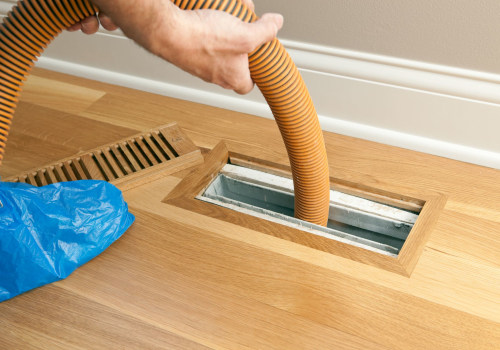
Yes, and it helps considerably more when you pair it with continuous fan circulation, regular air duct cleaning, and a filter that hasn't already loaded up. Closing windows alone slows infiltration. Closing plus circulating plus filtering removes particles that already made it inside.
Should I run the air conditioner during a smoke event?
Running the system helps, as long as the fresh air intake is closed or set to recirculate. The value comes from moving indoor air through the filter over and over, not from the cooling itself, which is exactly why continuous fan mode beats auto during these stretches.
Before You Head Outside
You're the one making this call for your household. Nobody else is going to check the wind before your kid's practice or your mother's afternoon walk, and that job lands on you whether or not anyone hands you the tools for it.
So use them. Read direction first, frontal timing second, and let the AQI reading confirm what the pattern already told you. Do that for one season and smoke days stop catching you off guard. Check the current readings for your area, keep top air filters ready for when conditions worsen, decide from data rather than from the color of the sky, and go make your plans with something solid behind them.